Plot
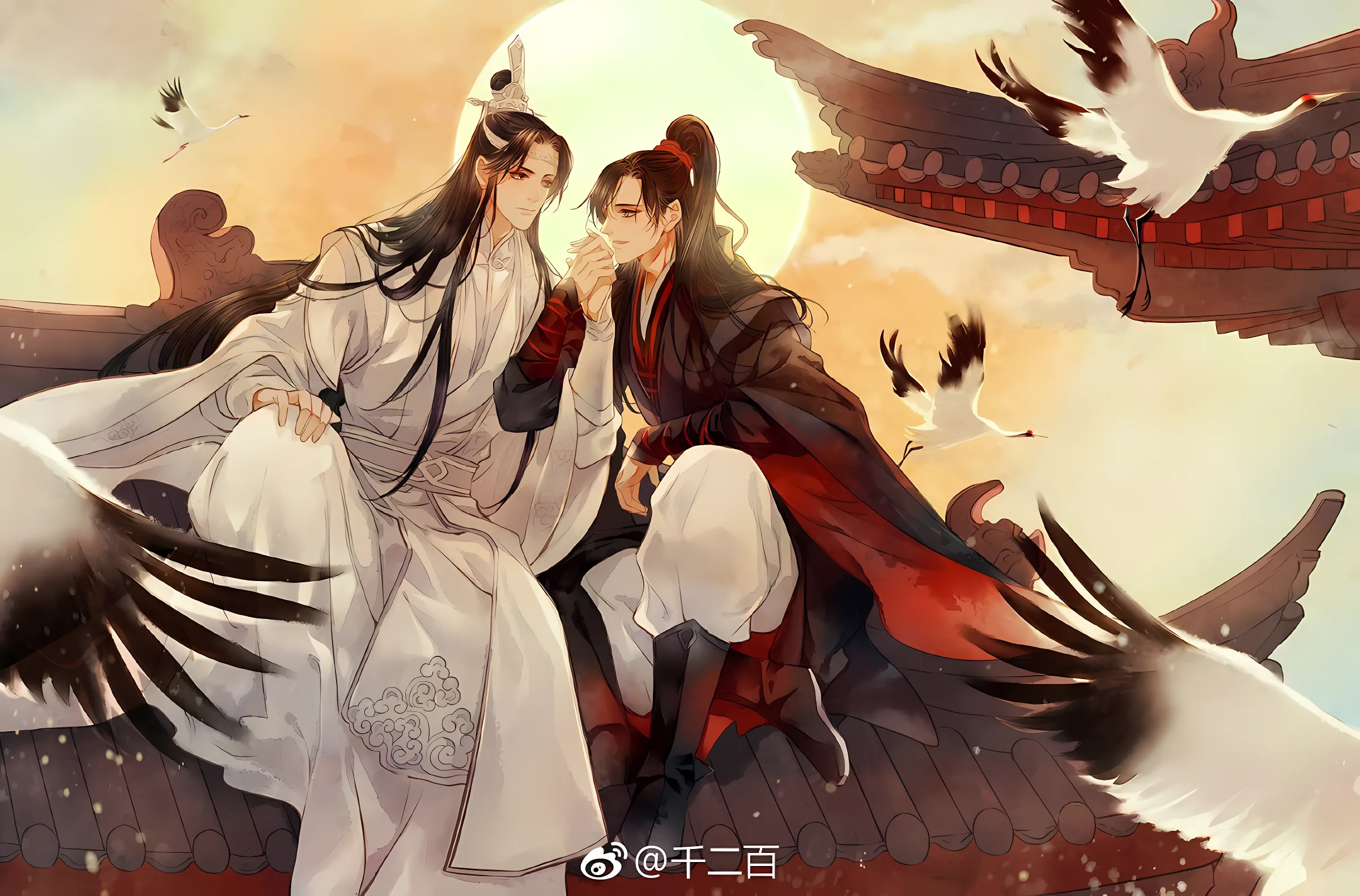
Mo Dao Zu Shi follows the story of Wei Wuxian, a talented and unconventional cultivator who invents “demonic cultivation,” a controversial technique involving harnessing resentful energy. Initially admired for his intelligence and power, Wei Wuxian becomes a feared and hated figure due to abandonment of conventional morality and cultivation. After his tragic death, he is reincarnated into the body of Mo Xuanyu, a disgraced cultivator, 13 years later.
Upon reincarnation, Wei Wuxian reunites with Lan Wangji, a stoic and respected cultivator from the Gusu Lan Sect, who had been Wei Wuxian’s peer and rival. As they investigate supernatural mysteries together, they uncover a dark conspiracy connected to Wei Wuxian’s original downfall. Alongside unraveling this conspiracy, Wei Wuxian reconciles with his past actions, rebuilds old relationships, and gradually realizes Lan Wangji’s deep and longstanding feelings toward him.
Characters
Wei Wuxian (魏无羡)
- Protagonist; mischievous, intelligent, charismatic, and morally complex.
- Invents demonic cultivation.
- Has a carefree, irreverent nature but fiercely loyal and protective of loved ones.
Lan Wangji (蓝忘机)
- Highly disciplined, stoic, righteous cultivator of the Lan Sect.
- Maintains an unyielding moral compass and profound devotion toward Wei Wuxian.
- Known for his elegant swordsmanship and mastery of musical cultivation.
Jiang Cheng (江澄)
- Wei Wuxian’s adopted brother; head of the Yunmeng Jiang Sect.
- Proud, competitive, emotionally conflicted due to his complicated relationship with Wei Wuxian.
Jin Guangyao (金光瑶)
- Ambitious and manipulative head of the Jin Sect.
- Complex antagonist whose schemes drive the central conflicts of the narrative.
Nie Huaisang (聂怀桑)
- Head of the Qinghe Nie Sect; seemingly weak but cunning and strategic.
- Secretly orchestrates the plot to reveal Jin Guangyao’s crimes.
Wen Ning (温宁)
- A gentle, shy young man turned into a powerful “Ghost General” by Wei Wuxian.
- Loyal and compassionate despite his frightening reputation.






Themes
Morality and Ambiguity
- Challenges traditional definitions of good and evil.
- Wei Wuxian’s demonic cultivation represents moral complexity and the consequences of choices driven by necessity and survival.
Redemption and Forgiveness
- Explores themes of redemption for past mistakes.
- Characters navigate guilt, forgiveness, and second chances, especially evident in Wei Wuxian’s revival and redemption.
Love and Devotion
- Deep emotional bonds, especially the romantic devotion between Wei Wuxian and Lan Wangji.
- Examines different expressions of love (familial, friendship, romantic).
Power and Corruption
- Critiques the corrupting influence of ambition and unchecked authority.
- Demonstrates how power can corrupt, leading even cultivators with noble intentions toward dark actions.
Acceptance and Identity
- Explores acceptance of one’s nature and identity.
- Wei Wuxian’s struggle with societal expectations and personal authenticity underpins his journey toward self-acceptance.
Reputation and Rumors
- Highlights how rumors and societal judgment influence perceptions and fates.
- The destructive power of misunderstandings and false narratives is central to Wei Wuxian’s story.
Datafication in Mo Dao Zu Shi
 Digital Labor Theory
Feminist and Marxist scholars distinguish between productive labor, which creates commodities, and reproductive labor—care, education, and community–building—that has traditionally taken place behind closed doors. Today, platforms datafy this once-private work: Silvia Federici (2012) shows how household and emotional labor become public metrics, and Kylie Jarrett’s “digital housewife” thesis highlights how our unpaid online activities sustain the attention economy.  Erotic Labor
Erotic labor encompasses the creation and sharing of fanfiction, fanart, and “shipping” communities driven by desire and pleasure. Although these creative acts feel personal and consumptive, each post, like, and share generates valuable analytics—turning fans’ emotional investment into unpaid labor that platforms and rights-holders capitalize on.  Reproductive Fan Labor
Beyond creative output, fans perform essential care work: moderating forums, translating texts, writing FAQs, and guiding newcomers. This reproductive labor nurtures the fandom’s community “labor power,” and by sustaining engagement it produces the steady stream of content and data that platforms monetize.  Datafication in MDZS Fandom
Mo Dao Zu Shi’s “data fans” coordinate mass streaming, voting, and hashtag campaigns—and even deploy automation—to boost view counts and rankings. What appears as passionate support becomes an assembly-line of quantified interactions, transforming leisure into measurable, monetizable labor for the entertainment industry.
Digital Labor, Eroticism, & Reproduction
in Mo Dao Zu Shi Fandom
Digital labor theory, drawing on Marxist and feminist traditions, distinguishes between productive work (creating commodities) and reproductive work (care, education, nurturing the next generation of laborers). Reproductive labor—including raising children, caring for households, and emotional support—has historically been done in the private sphere (often by women) yet underpins all economic production (Federici 2012). Kylie Jarrett’s digital housewife thesis argues that many of the “free” consumer activities on the Internet parallel this reproductive work: domestic chores, childcare, emotional care and community-building are now performed in public online spaces and datafied by platform algorithms. In Jarrett’s words, affective social-media labor “relies on reproductive work.” By contrast, we define erotic labor here as work aimed at pleasure and desire—enhancing one’s sexual or romantic appeal and managing intimate relationships (not necessarily in a heteronormative or procreative sense). Both erotic and reproductive labor may seem personal or emotional, but on digital platforms they produce measurable data and value.
Jarrett builds on these ideas by situating digital labor within a feminist framework: she shows how user activities that appear leisure-oriented or emotional (posting selfies, writing supportive comments, sharing family content) are functional analogues of housework—they sustain the web’s social fabric and generate profit for corporations. Jarrett thus centers a reproductive lens in digital-labor critique: much unpaid online work produces data and draws on skills long considered “women’s work.” In this view, reproductive labor performed publicly (e.g. community moderation, educating newcomers, emotional support on fan sites) is simultaneously economic labor—it is digital care that the market relies on, now tracked by analytics. Terranova’s notion of “free labor” and Henry Jenkins’s idea of fan communities as “produsage” also resonate: fans actively and voluntarily create content, interpret media and circulate meaning, but this creative labor is capitalized by media producers (Terranova 2000; Jenkins 1992). In sum, digital platforms blur boundaries: what used to be private care or sexual life often becomes public, measurable labor on which the fan economy depends.
The global fandom of Mo Xiang Tong Xiu’s Mo Dao Zu Shi (Grandmaster of Demonic Cultivation) exemplifies this datafication of erotic and reproductive labor. Mo Dao Zu Shi (and its spin-offs and adaptations—the second novel volume, the animated donghua, audio dramas, the live-action The Untamed, etc.) has an exceptionally active fan base, especially among young women. Fans produce a vast array of content—fanfiction, fanart, edits—much of it erotically charged (BL, or “boys’ love”) and intended for communal enjoyment. These erotic fanworks are a form of erotic labor: fans (often women) devote time and skill to creating pleasurable, romanticized visions of the characters. For example, Chinese readers publish yaoi fanfiction and illustrations of the two male leads together, enhancing both their own pleasure and the series’ appeal. Although creating fanart and fiction may seem non-industrial, on social media these creations generate likes, shares and discussions—data that boost the fandom’s visibility. Fans also manage fan communities and pairings (“ships”), a kind of emotional/erotic community-building; they often coordinate real-life meetups or online chat groups to live out collective fantasies. This relational work—organizing events around romantic or sexual appreciation of the story—is directed toward pleasure and desire, but like Jarrett’s housewives, these activities are performed publicly and generate network traffic.
At the same time, Mo Dao Zu Shi fans engage heavily in reproductive digital labor to sustain the fandom and promote the franchise. Reproductive fan labor here includes educating new fans about the story, moderating forums, translating content across languages, and recruiting others—tasks that nurture the fan community’s “labor power.” These activities are often collective and highly visible: for instance, experienced fans (“Wenren”) may post FAQs or summaries on public platforms so that newcomers can catch up. In this way, the fan community reproduces itself, analogous to social reproduction in a factory town where care-workers raise the next generation of workers. Crucially, these reproductive tasks are also productive in the digital-economy sense: they create content and engagement that platforms monetize. Jarrett’s analysis implies that this is the hidden basis of fan labor—care for the community becomes commodified (Jarrett 2015). As Federici and others have noted, such reproductive work is the foundation of the economy—without it, the next round of cultural production cannot proceed.
Importantly, Mo Dao Zu Shi fandom’s labor has been datafied through coordinated digital campaigns. Chinese fans often organize around metrics: streaming episodes repeatedly on official sites, voting en masse in online popularity polls, and trending hashtags on Weibo. Fans known as data fans (“shùjù fěn,” “数据粉”) specialize in this metric-driven work. A fan data-site report explains that “data fans focus intensely on doing data, managing comments, sending flowers, voting” for their idols, and thus “have more voice” in fan hierarchies. In practice, Mo Dao Zu Shi fans use multiple accounts and even software to generate traffic: automated tools (purchased or bootleg apps) can replay videos or retweet posts continuously. Modern fans routinely have “ten or more idol-chasing apps” on their phones to boost metrics, moving beyond the older era of manually refreshing pages. These automated regimes led Chinese media to dub female fan-workers data maids (“数据女工”) who “have finally freed their hands” thanks to these tools. These data maids essentially perform assembly-line work for the fandom: entering captchas, refreshing pages and clicking virtual gifts on command, all to produce quantifiable results (stream counts, vote tallies, trending ranks).
The goal of these efforts is often to elevate beloved actors, characters, or works to liúliàng míngxīng (“流量明星,” “traffic stars”) status—idols with enormous online popularity. Being a traffic star means commanding attention and endorsement deals; it is earned by raw numbers. Selecting the right traffic star is the first step in monetizing fans, but truly “leveraging the fan circle” requires integrating fans into marketing tasks (e.g. requiring followers to check in, share and sign up on websites to unlock prizes). In other words, fandom data is a currency. Chinese surveys confirm that fan dedication is astonishingly metric-driven: about 30% of fans admit they will pad TV viewership and 27% will pad movie ticket sales for their idols. Mo Dao Zu Shi fans mirror this pattern. They coordinate streaming parties (playing episodes on loop) to boost official view counts on platforms like Tencent Video or Bilibili; they vote in idol contests for the anime’s voice actors or the drama’s stars; they flood Weibo with designated hashtags to trend rankings. Each of these actions produces data that can be sold: higher view counts attract advertisers, bigger social-media presence draws sponsorship, and chart-topping polls give leverage to actors’ agencies. Thus what might look like fan support is actually uncompensated digital labor fueling the entertainment economy.
These practices blur the line between private passion and public production. The ostensibly personal reproductive tasks of nurturing the fan community and the erotic tasks of pursuing pleasure simultaneously serve economic ends. Each poll vote, each live-stream, and each piece of fan art posted or translated is data. In Jarrett’s terms, fans have become digital housewives on a massive scale: they apply domestic diligence (military-style coordination, hierarchical delegation of tasks) to fandom, transforming care and desire into cashable metrics. The Mo Dao Zu Shi fandom thus exemplifies the datafication of labor: erotic and reproductive fan activities are performed openly on the web, where platforms record and monetize them. Coordinated streaming, voting and hashtag campaigns are new forms of reproductive digital labor—they require time, skill and emotion, yet directly produce data-driven value (audience figures, advertising credit, brand associations). This labor is productive in a literal sense, feeding capitalist accumulation under the guise of leisure.
Conclusion
Analyzing Mo Dao Zu Shi through the lens of erotic and reproductive digital labor reveals how modern fandom reconfigures traditional gendered work. Fans perform “housewifely” care and relational work on public platforms, but this labor is no longer invisible—it is coded into data streams that power the fan economy (Jarrett 2015). Meanwhile, erotic fan production (yaoi creations, romantic community-building) is similarly labor-intensive, fostering pleasure but also generating social-media engagement. The Chinese industry’s concepts of data fans, data maids and traffic stars highlight this reality: fans are mobilized to generate growth figures for idols and shows, effectively working as unpaid data operators. All these activities—from erotic fan-fiction writing to algorithmic voting—demonstrate how affective and reproductive tasks have become commodified. As Jarrett emphasizes, the capitalist web relies on these unseen labors: what was once private care or intimate desire is now inextricably public and profitable. Mo Dao Zu Shi fandom, with its highly organized, data-driven support networks, epitomizes this digital transformation of love, desire and care into labor.
References
- CBNData (Shanghai Yingfan Digital Tech). “想赚粉丝的钱?找对流量明星只是第一步” (2019).
- Federici, Silvia. Revolution at Point Zero: Housework, Reproduction and Feminist Struggle. PM Press, 2012.
- Jarrett, Kylie. Feminism, Labour and Digital Media: The Digital Housewife. Routledge, 2015.
- Jenkins, Henry. Textual Poachers: Television Fans and Participatory Culture. Routledge, 1992.
- Mo Xiang Tong Xiu. Grandmaster of Demonic Cultivation (Mo Dao Zu Shi), Vol. 1. Seven Seas Entertainment, 2021.
- Mo Xiang Tong Xiu. Grandmaster of Demonic Cultivation (Mo Dao Zu Shi), Vol. 2. Seven Seas Entertainment, 2022.
- Mo Xiang Tong Xiu. Grandmaster of Demonic Cultivation (Mo Dao Zu Shi), Vol. 3. Seven Seas Entertainment, 2022.
- Mo Xiang Tong Xiu. Grandmaster of Demonic Cultivation (Mo Dao Zu Shi), Vol. 4. Seven Seas Entertainment, 2022.
- Mo Xiang Tong Xiu. Grandmaster of Demonic Cultivation (Mo Dao Zu Shi), Vol. 5. Seven Seas Entertainment, 2023.
- Sohu Entertainment (Hard Candy). “数据女工人手N个APP 追星自动化进行中…” (2021).
- Terranova, Tiziana. “Free Labor: Producing Culture for the Digital Economy.” Social Text 63 (2000): 33–58.