What are Chinese Webnovels
Chinese web novels are serialized works of fiction that authors release chapter‑by‑chapter on large online platforms such as Qidian (起点), and Jinjiang Literature City (JJWXC/晋江文学城). Written in contemporary vernacular, they span an enormous range of genres—fantasy, historical, romance, science‑fiction, slice of life, and more—and rely on reader feedback and micropayments for revenue, so pacing, cliff‑hangers, and community interaction shape the narrative. Successful titles are frequently adapted into printed books, manhua (comics), dramas, or games, making the web‑novel ecosystem a primary incubator for China’s popular culture industries.
What is Danmei
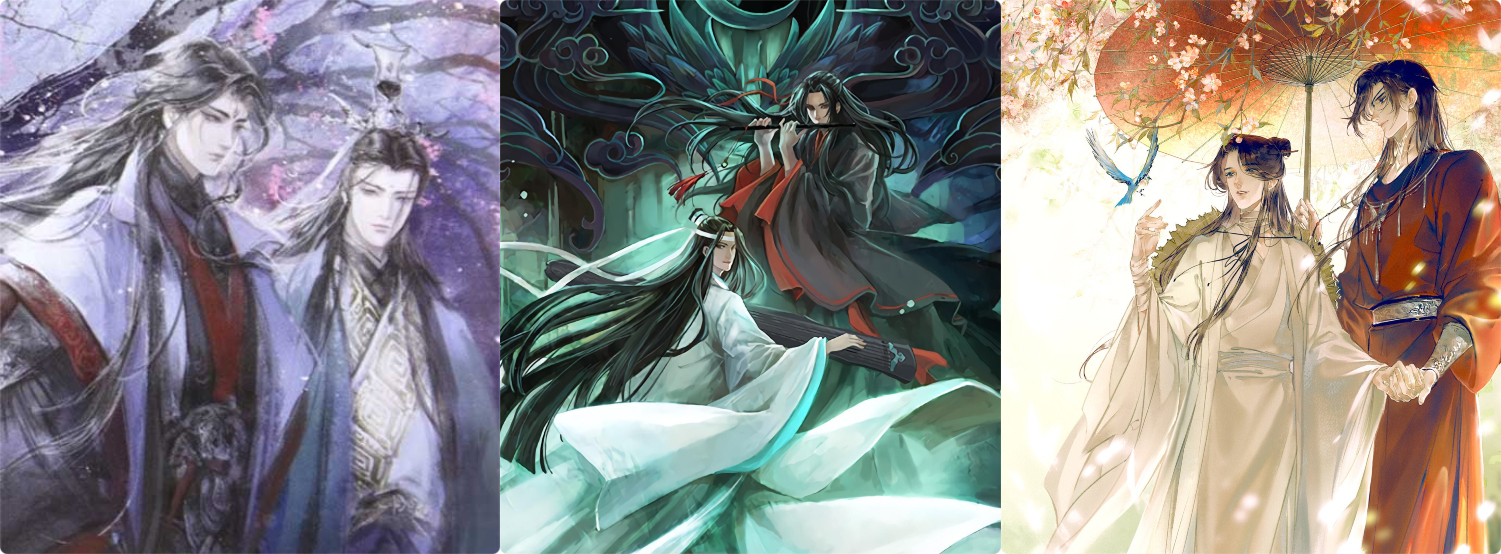
Danmei (耽美, lit. “indulging in beauty”) is a subgenre within Chinese web fiction and broader media that centers male–male romantic and/or erotic relationships. Influenced by Japanese BL (Boy’s Love)/yaoi yet rooted in local literary traditions, danmei narratives mix melodramatic romance with genre conventions such as xianxia fantasy, historical intrigue, or modern workplace drama. Although primarily written by and for women, its readership is increasingly diverse, and hit danmei novels—e.g., Mo Dao Zu Shi (魔道祖师) or Heaven Official’s Blessing (天官赐福)—have spurred major animation, live‑action, and merchandise franchises while navigating shifting state regulations on LGBTQ+ representation.
Jinjiang Literature City

Jinjiang Literature City (晋江文学城) is one of China’s leading websites for original web novels and hosts and enormous library of works, from romance and fantasy to historical fiction. Notably it is also home to a large number of danmei fiction.
Founded in 1998, the site is home to a passionate community. The majority of it’s users are women from late teens to early 30’s who posses the three highs (三高), high income, high education and high social status (Feng, Have House 50).
Jinjiang has built a “reader-oriented” platform, where writing is a collaborative experience. This is achieved through a robust and lively comment and liking system, which has created a space where users can express a wide variety of opinions, leading to a culture of creativity and an organic body of works, that are constantly changing.
Importantly for our research, in 2007, after a slew of legal issues, Jinjiang decided to transition to a VIP system, where readers pay to access the next few chapters of their favorite works, and generally to monetarily support the author (Feng, Have Mouse 50). This mirrors the for profit publishing market in China, and indeed, some authors have been able to make a living off of Jinjiang, especially if their stories make the jump to traditional print media, or adaptations.
Digital capital is rapidly growing, and has become a huge part of the modern social and monetary economy and the for profit nature of Jinjiang, shows how datification and digital labor have become increasingly influential in a global economy. The low-stakes entry of Jinjiang, as well as the potential for financial compensation, has not only shaped the way that web-fiction is produced, but has also had far-reaching implications for China’s literature market as a whole.
Webnovel tropes and conventions
Some webnovel vocabulary:
Setting: Chinese webnovels have their own commonly used settings and tropes. Particularly common for non-modern settings are Wuxia (武俠) and Xianxia (仙侠) settings. Wuxia settings are fairly grounded in comparison to Xianxia, but tend to center around martial artists with fantastical abilities, who are often embroiled in complicated feuds. Xianxia is a step up from Wuxia, as Wuxia characters tend to be, at least somewhat, susceptible to the limits of the human body and the world they inhabit tends to be similar to Earth. In Xianxia, however, characters have the ability to ascend to godhood, and they inhabit a world filled with wonder, including mythical creatures and strange, magical peoples.
Example: Scum Villain’s Self-Saving System and Heaven Official’s Blessing are Xianxia novels, Grandmaster of Demonic Cultivation is a Wuxia novel.


Magic: Both Wuxia and Xianxia novels tend towards Cultivation magic, though on completely different scales. The concept of cultivation is based loosely on traditional Daoist, and sometimes Buddhist, practices. In Wuxia, cultivation typically involves strenuous practice of physical martial arts, including a lot of horse stance (squatting) and swordsmanship practice. Xianxia also tends to include physical martial arts, especially as a cultivator begins their practice. However, as a character continues practice, and gets the basics down, cultivation becomes a much more mental and spiritual practice. The main difference in this case between Xianxia and Wuxia is the upper ceiling of cultivation. While Xianxia cultivators will always gain the ability to fly, move to other realms of existence, and often command subspaces, the most a Wuxia character will likely be able to achieve is super-speed, and the ability to leap around using Qinggong (轻功, lit. lightness skill)
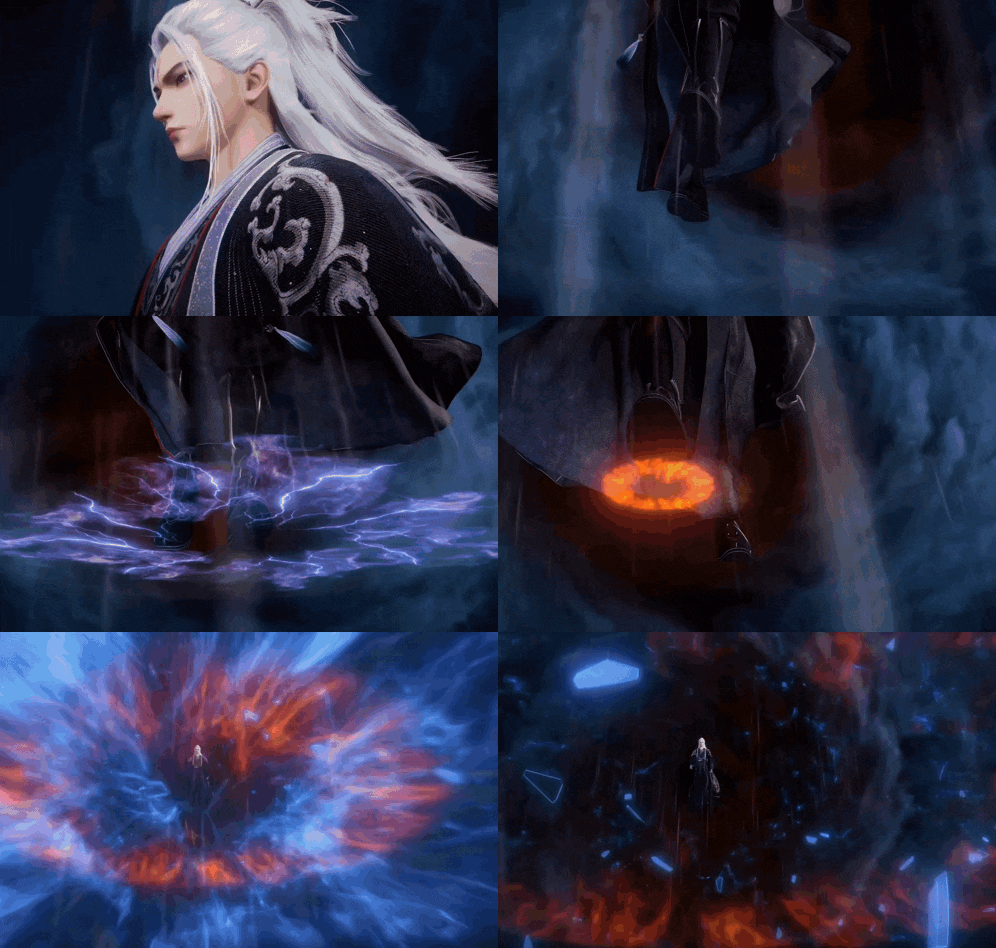

For more Wuxia and Xianxia terminology, check out this helpful glossary by webnovel fan Immortal Mountain
⚙️What is Digital Labor?
⚙️ Digital Labor Theory
- Distinguishes productive labor (creating commodities) from reproductive labor (care, education, community-building) traditionally hidden in the private sphere
- Shows how platforms datafy household and emotional work, turning once-invisible tasks into measurable metrics
- Frames the “digital housewife” thesis: unpaid online activities (forums, social media, fan spaces) sustain the attention economy
- Highlights erotic labor: fanfiction, fanart, and “shipping” communities generate valuable analytics from acts of desire and pleasure
- Recognizes reproductive fan labor: moderating, translating, writing FAQs, and onboarding newcomers as essential unpaid work that keeps platforms thriving